Nine years ago, I visited the WARD laboratory in Nebraska for the first time. This year, I came back and toured the lab with Dr. Ray Ward.
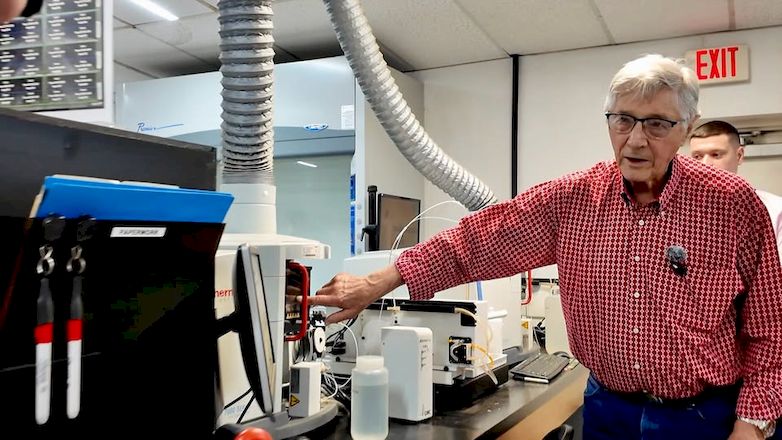
This time, I was particularly interested in the discussion about soil health. Ray spoke at length about soil biological activity, CO₂ emissions, water-soluble carbon and nitrogen, the role of microorganisms, soil structure, and the movement of water and air. At the end of the tour, we went into a separate room where they conduct analyses specifically related to soil health.
A standard soil analysis primarily answers the question: What’s in the soil? But my conversation with Ray Ward also touched on something else: What’s happening in the soil?
Soil that breathes
Ray Ward described one of the tests for soil biological activity. A sample is moistened and left for 24 hours, after which the amount of CO₂ released during that time is measured. The amount of carbon dioxide released provides an indication of biological activity in the soil.
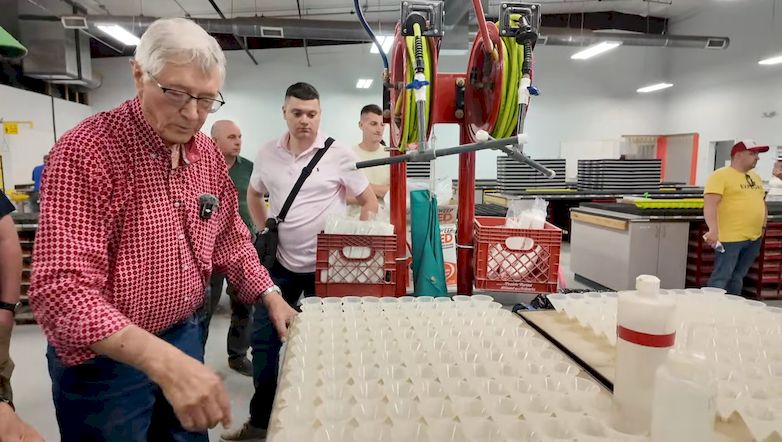
In explaining this test, Ray drew an interesting parallel with what happens directly in the soil. Well-aggregated soil contains pores filled with air. When soil biology is active, microorganisms produce CO₂ as part of their activity. When it rains and water fills the pores, it displaces the carbon dioxide and pushes it out of the soil.
Then plants begin to take up water, the water level in the pores drops, and oxygen enters again. Both soil microorganisms and plant roots need this oxygen.
Ray compared this continuous exchange to the way lungs work: water enters the soil and CO₂ moves out; as plants take up water, oxygen moves back into the soil.
The soil breathes.
And here, the connection between soil structure and its biology becomes clear. For this exchange to occur, pores are needed through which water and gases can move. The amount of CO₂ released from the soil after it is moistened becomes one of the indicators of biological activity within it.
Why WARD moved away from the classic Haney test
When the topic turned to assessing soil health, Ray Ward focused specifically on the Haney test.
The classic version of this test takes into account soil respiration, water-soluble carbon and nitrogen, and uses a special H3A extraction solution. This solution contains organic acids designed to mimic root exudates and indicate which nutrients may become available to plants.
But it was this part of the test that raised questions for Ray. According to him, H3A does not work well in alkaline soils. That is why WARD moved away from the classic version of the Haney test.
In their assessment of soil health, they retained the indicators they consider useful but supplemented them with other data. Specifically, they take into account pH, organic matter, and the results of a standard soil analysis. In other words, they draw conclusions based on a broader set of indicators rather than relying solely on the classic Haney test.
Ray was quite clear: he does not recommend spending money solely on the classic Haney test because, in his opinion, it lacks the data needed for a comprehensive assessment.
What interests me here is the logic itself. Even a method for assessing soil health is not viewed as something set in stone. It is tested under different conditions, its limitations are identified, and the method is modified.
From sample to result
Next, we toured the lab and saw the process a typical soil sample goes through: receiving, drying, grinding, preparation for analysis, and finally the measurement of different parameters.
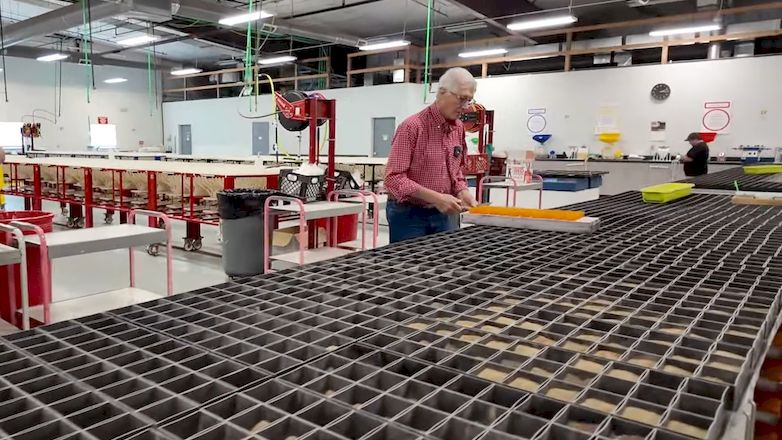
The scale of the work here is impressive. Over the past year, WARD analyzed 546,000 soil samples, and during the busiest fall period, the lab can receive around 5,000 samples a day. With such a high volume, a significant part of the process is automated.
Among the new equipment, Ray showed us a mid-infrared spectrometer that costs about $250,000.
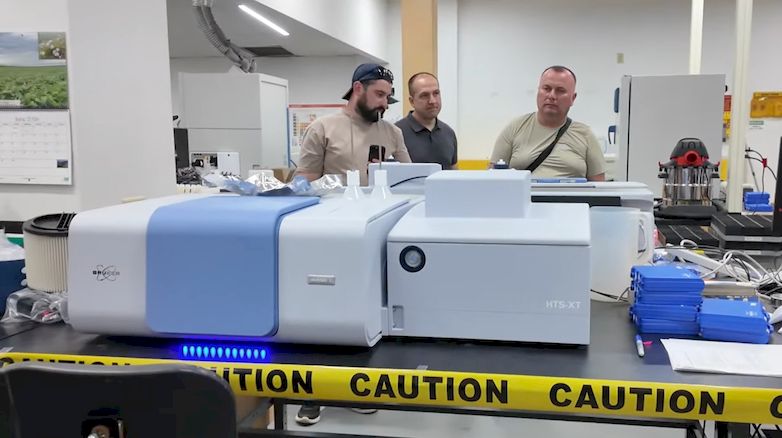
The analysis requires only a very small amount of soil, and the scan takes about 30 seconds. The resulting spectrum can be used to assess various soil characteristics. WARD received a USDA database containing around 90,000 soil spectra to help build its models.
What I found interesting was not so much the speed of the new instrument as the direction of its future use. Ray said that the next step is to apply spectral analysis to assess soil health as well.
A dedicated soil health room
At the end of the tour, we entered a room that Ray simply described as:
“This is our soil health room.”
Among other things, PLFA analysis is conducted here. PLFA analysis uses phospholipid fatty acids as biomarkers to assess different groups of soil microorganisms. The results show Gram-positive and Gram-negative bacteria, saprophytic and mycorrhizal fungi, as well as other groups. The analysis also provides an assessment of total microbial biomass and its diversity.
In that same room were soil samples that had been left for 24 hours to measure CO₂ emissions. So, at the end of the tour, we had effectively come full circle, back to where our conversation about soil health began: its biological activity.
Ultimately, it all comes down to a simple question. We’re used to asking what’s in the soil. But that’s no longer enough to understand its health. We also need to see what’s happening inside it.