Plow a field after 15 years of No-till?
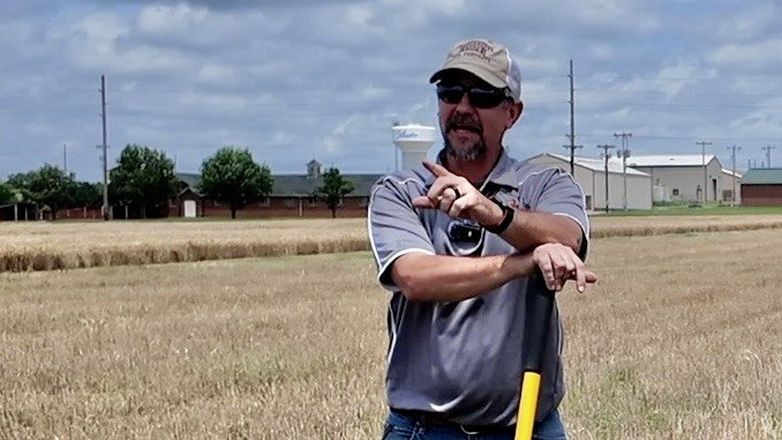
Under certain conditions, Brian Arnall said he could consider such an option during our visit to a research plot at Oklahoma State University. Winter wheat has been grown here continuously under No-till since 2009.
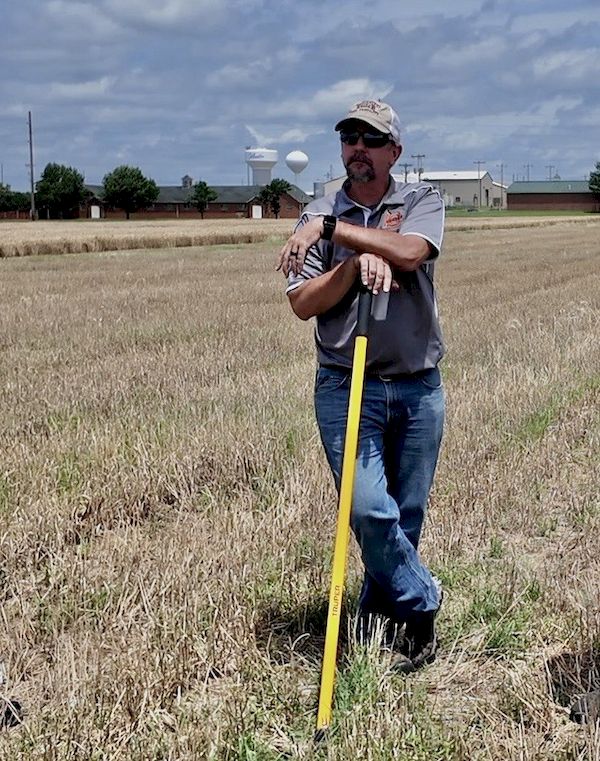
Brian himself does not recommend growing wheat continuously. In fact, there is no crop rotation here at all. Wheat has followed wheat for many years. The experiment continues, however, so researchers can observe how the soil, organic matter and nutrients behave under unchanged conditions.
What changed during the years of No-till
According to Brian, after the transition to No-till, the distribution of organic matter and nutrients within the soil profile became distinctly stratified. A significant proportion accumulated in the upper few centimeters. Acidity associated with the long-term surface application of fertilizers is also more pronounced in this layer.
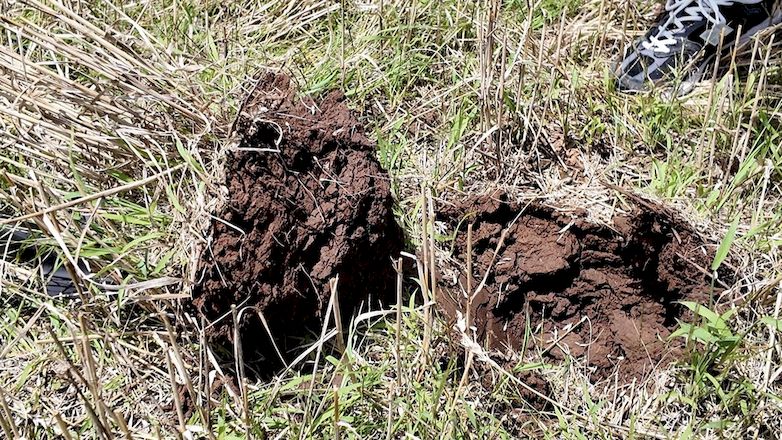
This is understandable. Crop residues remain on the surface, fertilizers are also applied primarily to the upper layer, and there is no mechanical mixing of the soil.
It is under this combination of conditions that Brian considers a one-time corrective tillage operation. Among the possible reasons, he mentioned strong nutrient stratification, compaction, the consequences of poor field management in the past, and a large accumulation of weed seeds in the surface layer.
In some cases, he believes this could involve more than shallow loosening. It could even mean tillage that inverts the soil.
At the same time, Brian is not saying that every field must be plowed after a certain number of years under No-till. He gave examples of fields that do not require tillage even after several decades of No-till, while others, in his view, may need corrective intervention much sooner.
What does this experiment actually show?
Something else caught my attention.
What is the point of drawing conclusions about No-till from a monoculture experiment when Brian himself strongly advises against growing any crop continuously?
When I asked him directly, his answer was unequivocal: no monocultures, period. For this region, he considers a rotation including corn, soybeans, wheat, sorghum and double crops to be a better option.
Diversity is one of the principles of soil health. This principle is absent from the experiment. There are no changes in crops, root architecture, the quantity and composition of plant residues, or the periods when living roots are actively growing.
In effect, the same model has been repeated in this field for many years.
I understand the scientific value of such an experiment. Keeping the conditions unchanged allows researchers to isolate particular factors and observe them over decades. This is also why long-term experiments cannot simply be altered halfway through. Doing so would disrupt their history and make comparisons with earlier results more difficult.
But it seems to me that the conclusions should also remain within the boundaries of those conditions.
This plot provides a good picture of what happens to No-till under continuous wheat. It does not tell us whether the same problems would develop in a system with a diverse crop rotation, crops with different root architectures and well-planned residue management.
And it certainly does not prove that a properly designed No-till system will inevitably have to be plowed sooner or later.
No-till Is more than the absence of tillage
A farmer can stop tilling the soil but continue growing the same crop, drive machinery across the field when the soil is wet, neglect soil acidity and fail to account for how nutrients are distributed through the soil profile. Technically, the field may still be under no-till. But the result depends on the entire management system.
For this reason, problems that appear in such a field should not always be attributed solely to the absence of mechanical tillage.
Tillage may quickly mix soil layers, bury weed seeds or temporarily relieve compaction. But it does not correct the reasons why those problems developed. If the field then returns to the same monoculture and the same management practices, the system will begin moving down the same path again.
That is what made this conversation interesting to me. I am not ready to accept the results of a single monoculture experiment as an argument for periodic tillage in No-till systems. At the same time, it is important to hear this perspective, understand the observations behind it and recognize the context in which it was formed.
For me, this plot did not prove that No-till fields need to be plowed from time to time. Instead, it showed once again that simply abandoning tillage does not automatically create healthy soil. A complete system is needed, and diversity is one of its foundations.